
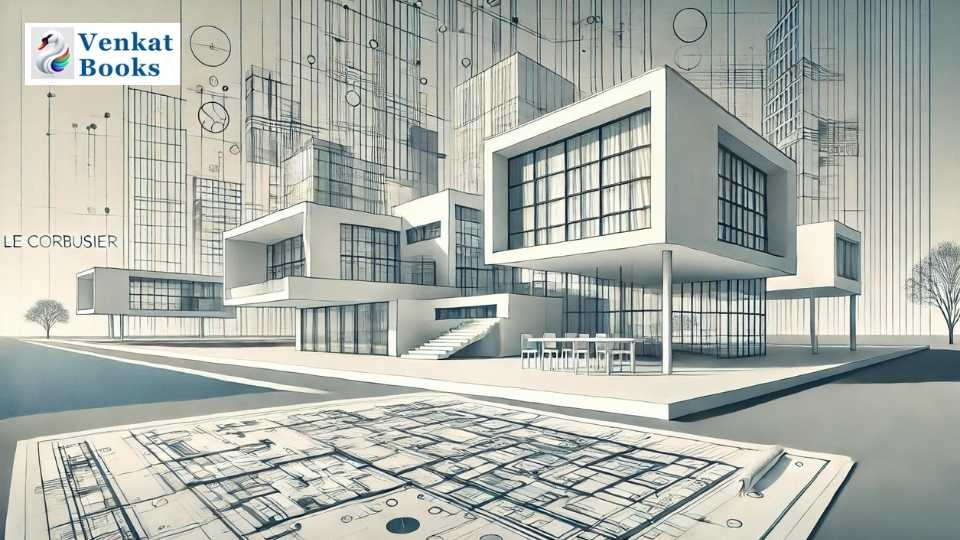
“Toward an Architecture,” originally titled “Vers une Architecture” and commonly referred to by its English translation “Towards a New Architecture,” is a seminal work by the renowned architect Le Corbusier (Charles-Edouard Jeanneret). This collection of essays is a powerful advocacy for modern architecture, vehemently arguing against the prevalent trends of eclecticism and art deco of its time. First published in the magazine L’Esprit Nouveau beginning in 1921, the book’s essays envision an architectural renaissance rooted in the principles of functionality and a new aesthetic of pure form, reflective of the industrial age’s spirit.
The work has left a profound mark on the architectural field, asserting itself as a manifesto for an entire generation of architects and provoking a range of reactions from admiration to disdain. Architectural historian Reyner Banham highlighted its colossal influence, considering it unmatched by any other architectural publication of the 20th century, a legacy that endures well into the 21st century.
Why read?
1.Le Corbusier’s “Towards a New Architecture” is more than just a collection of essays; it is a call to action for a fundamental transformation in how we conceive and interact with built environments. The author dismisses superficial stylistic experiments in favor of a profound change in architectural thinking, one that harmonizes with the dynamics of the modern industrial era.
2.Each essay systematically debunks outdated architectural norms and proposes a new framework that prioritizes functionality and simplicity of form. This vision aligns architecture with contemporary technological advancements and societal needs, urging a shift towards buildings that enhance human living through their design.
3.The book remains a cornerstone of architectural theory, continuing to inspire and challenge architects to rethink the essence of architecture in the modern world.
Venkat